Blue Lobelia Herb
Lobelia inflata
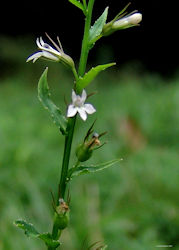
Blue Lobelia is known by other names: Blue Cardinal Flower, Blue Lobelia, Great Blue Lobelia, Great Lobelia, High-lobelia, Indian Tobacco, Lobelia
Lobelia Herbal use
This information is for educational use only. Avoid internal use of Lobelia. Lobelia is strongly emetic, which means it makes you throw up.
An overdose of lobelia may cause dizziness, nausea, hypo-tension, vomiting, stupor, tremors, paralysis, convulsions, coma, and death.
Lobelia stimulates the respiratory center of the brain, producing stronger and deeper breathing, making it very useful in treating many respiratory complaints, such as asthma, chronic bronchitis, whooping cough, spasmodic croup, and pneumonia. While at the same time isolobelanine, relaxes the respiratory and neuromuscular system and acts as a nervine and antispasmodic. It is a systemic relaxant and a holistic combination of stimulation and relaxation. The seeds contain a much higher percentage of lobeline than the rest of the plant.
Mullein is a safer herb with similar but gentler effects on the respiratory system, and isn't emetic in moderate amounts.
The whole Lobelia plant is used by experienced herbalists as an analgesic, cathartic, emetic, expectorant, diaphoretic, anti-asthmatic, stimulant, antispasmodic, narcotic, and sedative. Used to treat convulsive and inflammatory disorders such as epilepsy, hysterical convulsions, traumatic injuries, tetanus, sores and abscesses, colds and fevers, diphtheria and tonsillitis. When chewed it tastes similar to tobacco and produces effects like those of nicotine. Lobelia is used in some anti-smoking products. Also used for scorpion and snake bites and to induce nausea and vomiting. A poultice of the root has been applied in treating pleurisy, rheumatism, tennis elbow, whiplash injuries, boils, ulcers and hard to heal sores.
Medical research has found the plants constituents to be Piperidine alkaloids including Lobeline, and other carboxylic acids as well as isolobelanine, gum, resin, chlorophyll, fixed oil, lignin, salts of lime and potassium, with ferric oxide.
Blue Lobelia Habitat and Description
Lobelia is a perennial herb native to Eastern N. America from Maine to S. Dakota, south to Texas and Missouri. It is found growing in moist woods, stream and pond banks, and marshes. The stems are erect, sometimes branching, flower stalks. Lobelia blooms from July to November. Growing to 3 feet high they are covered with light blue or purplish two lipped flowers, the lower lip is divided into three pointed lobes and the upper lip into two. The lower leaves are large, ovate, alternate, hairy, and petioled (having a leaf stalk) while the upper leaves, growing on the stalk are smaller and sessile (having no leaf stalk). Seed capsules are formed after flowers fade and are two celled, containing many tiny brown seeds.
How to Grow and Harvest Lobelia
A beautiful garden border plant, cultivation is fairly easy, Lobelia prefers light to medium moist, well drained soils and partial shade. Plant seeds in late summer or early fall. Gather the plant tops after some of the seed capsules have formed, dry for later use.
Lobelia Folklore and History
Lobelia was used as a Ceremonial (Emetic) in religious ceremonies by some native American tribes. An infusion of plant was taken to vomit and cure tobacco or whiskey habit or as a love or anti-love medicine. A decoction of Lobelia was taken to counteract sickness produced by witchcraft. It was believed by some native North American Indian tribes that if the finely ground roots were secretly added to the food of an arguing couple they would love each other again.
Article by Deb Jackson & Karen Bergeron
Lobelia Links
Botanical.com : Lobelia botanical.com/botanical/mgmh/l/lobeli38.html
Disclaimer
The herbal information on this web site is intended for educational purposes only. It is not the intention of the editor to advise on health care. Please see a medical professional about any health concerns you have. These statements have not been evaluated by the FDA. The information on this web site is not intended to prevent, diagnose, treat, or cure any disease.