Ginkgo Biloba
Other Names: Ginkgo, Maidenhair Tree, Golden Fossil Tree
The following information is based on historical uses found in herbal lore and unscientific claims. and needs citations. This article is currently being updated, and may have inaccuracies.
Ginkgo Biloba Herb Use
Extracts of the fruit and leaves of the Ginkgo tree have been used in China for over 5,000 years. Ginkgo Biloba has been historically used in alternative medicine for Heart disease, Kidney disorders, Alzheimer's, Asthma and as an energy builder.
Ginkgo is an adaptogen herb, which helps the body with stressful situations. It is also helpful in the treatment of allergies, Alzheimer's disease, anxiety attacks, arthritis, ADD, circulatory disorders, cancer, coughs, depression, dizziness, equilibrium problems, headaches, heart & lung problems, memory loss, mood swings, muscular degeneration, tinnitus, toxic shock syndrome, varicose veins, vascular impotence & vertigo. Ginkgo biloba extracts are relatively considered safe and free of side effects, though taking very large doses may lead to diarrhea, nausea and vomiting, which can be controlled by reducing the amount consumed. Those taking blood thinners should consult with their physician before taking ginkgo biloba in high doses, due to its blood thinning tendencies. It is also advisable to discontinue use prior to surgery.
Ginkgo Biloba Habitat and Description
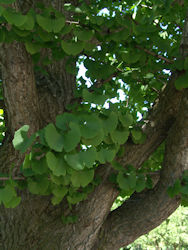
Perennial deciduous tree, native to eastern China. Ginkgo Biloba is the oldest species of tree still living on the earth and can be traced back more than 300 million years. For this reason, ginkgo is often referred to as "the living fossil." A species of the family Ginkgoaceae, it is the only one of the family known to have survived the Ice Age. Cultivate with care, grow in gallon pots for a year or two before transplanting seedlings to their permanent location in the garden or landscape. Plant one for your Great, Great, Great, etc. grandchildren. They grow as tall as 70 feet and live (some say) a thousand years. When male and female trees are grown together, the female produces yellow plum-like fruits in autumn which when ripe look (strangely) like little brains! When these fall to the ground and are squashed they give off a truly disgusting odor (like rancid butter) but contained within the fruit is a seed which is considered a delicacy in China where it is usually roasted before being eaten. The leaves are green to gold, fan-shaped, petioled, with many radiating veins and about 4 to 5 inches wide. Gather fresh green leaves in summer, dry for later use.
Ginkgo Biloba History and Folklore
Ginkgo is strong in legend and lore of China, and has been lovingly adopted by most cultures in the temperate regions of earth. Darwin called it a living fossil, the only species remaining of a genus which flourished in the time of the dinosaurs. Gingko is held or carried to help improve the memory. A mild tea prior to bedtime will help to remember dreams during sleep.
Article by Deb Jackson
Disclaimer
The herbal information on this web site is intended for educational purposes only. It is not the intention of the editor to advise on health care. Please see a medical professional about any health concerns you have. These statements have not been evaluated by the FDA. The information on this web site is not intended to prevent, diagnose, treat, or cure any disease.