Spearmint
Mentha spicata
Other Names: Garden Mint, Menthol Mint, Mint, Sage Of Bethlehem, Silver Mint, Spear Mint
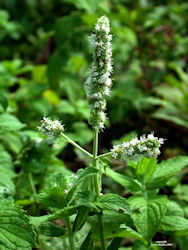
Spearmint Herbal and Edible Use
Spearmint is an edible herbl, the leaves and flowers are edible raw or cooked. A strong flavor, they are used in salads or added to cooked foods. A herb tea made from the fresh or dried leaves has a very pleasant and refreshing taste, leaving the mouth and digestive system feeling clean. Also great for mint jelly, an old favorite.
The constituents in spearmint are 1,8-cineole, acetic-acid, acetophenone, alpha-pinene, alpha-terpineol, apigenin, arginine, benzaldehyde, benzyl-alcohol, beta-carotene, beta-sitosterol, borneol, calcium, carvacrol, carvone, caryophyllene, diosmin, ethanol, eugenol, farnesol, geraniol, hesperidin, limonene, luteolin, menthol, methionine, niacin, oleanolic-acid, perillyl-alcohol, pulegone, rosmarinic-acid, terpinen-4-ol, thiamin, thymol, tryptophan, ursolic-acid, and many vitamins and minerals.
An essential oil from the leaves and flowers is used as a flavoring in candy, gum, ice cream, drinks and commercially prepared hygen products (toothpaste, mouthwash, etc). Spearmint has been used as an alternative medicine for centuries on many different continents. It is antiemetic, antiseptic, antispasmodic, carminative, diuretic, restorative, stimulant, stomachic and tonic. The herb tea made from the leaves is used in the treatment of fevers, bronchitis, chills, cramps, chronic gastritis, common cold, headaches, indigestion, morning sickness, motion sickness, nasal congestion, nausea, halitosis, painful menstruation, and various minor ailments. Externally the stems are crushed and used as a poultice on bruises. The essential oil in the leaves, is a great rub for stiffness, muscle soreness and rheumatism, the oil also a powerful antiseptic and should not be taken in large doses. Futher research is proving the plant to be of use in many diseases.
Spearmint Habitat and Description
Perennial herb native to Central Europe now naturalized throughout the U.S. and Canada. Found growing on roadsides and in waste places, usually in damp soils and sunny positions. Cultivation: Spearmint is easily grown, it succeeds in most soils and situations so long as the soil is not too dry. Prefers a sunny position for production of essential oils, but it also succeeds in partial shade. Division can be easily done at almost any time of the year. A matted creeping root system, sends up erect, square stems to about 2 feet high. The leaves are short-stalked, lance-shaped, wrinkled, and bright green, with finely serrate edges. The small flowers are arranged in whorls or rings on spikes in the axils of the upper leaves, pinkish or lilac in color, flowers bloom in late June through August. Gather the above ground plant when first starting to bloom, the stalks should be cut a few inches above the root, on a dry day, after the dew has disappeared, and before the hot sun has taken any oil from the leaves, and dried for later herb use.
Spearmint History and Folklore
Both the essential oil and the stems are used in folk remedies for cancer. A poultice prepared from the leaves is said to remedy tumours. The plant repels insects, rats, mice and was formerly used as for strewing (thrown about).
Spearmint Easy Mint Jelly Recipe
Steep a handful of mint leaves in one of the various kinds of sweetened gelatin. The jelly should be a delicate shade of green and make about a pint of jelly. Some like to strain the liquid through a cheese cloth to remove all particles of mint before allowing to set, I kinda like the little green specks.
Article by Deb Jackson & Karen Bergeron
Disclaimer
The herbal information on this web site is intended for educational purposes only. It is not the intention of the editor to advise on health care. Please see a medical professional about any health concerns you have. These statements have not been evaluated by the FDA. The information on this web site is not intended to prevent, diagnose, treat, or cure any disease.