Sweet Cicely Herb
Author: Karen Bergeron (c) 2019
Osmorhiza longistylis, Osmorhiza claytoni
Other Names: Anise-root, Longstyle Sweet-root, American Sweet Cicely, Licorice root, Wild Anise
This Sweet Cicely is a Northern American Native.
It is not the European Sweet Cicely, Myrrhis Odorata
or the Anise Plant Pimpinella anisum.
Sweet Cicely Herbal Folklore
The following information is based on historical uses found in herbal lore and unscientific claims. I couldn't find any research on this herb to prove benefits or safety issues it may have in humans.
Sweet Cicely was used extensively by Native American Indian tribes to treat digestive disorders and as an antiseptic wash.
Sweet Cicely root is said to being the most active part for herbal use.
A medicinal tea made from the root is used for a digestive aid and gentle stimulant for weak stomachs.
A weak herb infusion of Sweet Cicely was used to bath sore eyes.
The crushed root is said to be an effective antiseptic poultice for the treatment of boils and wounds.
Herbal cough syrup has been made of the fresh juice and honey.
Sweet Cicely Plant
Larger Sweet Cicely pictures
Sweet Cicely Habitat and Description
Sweet Cicely is a North American native perennial herb, found growing in rich woods and thickets from Eastern N. America - Nova Scotia to Ontario, Alabama, Tennessee, Kansas and Colorado.
The root of Sweet Cicely is a very
aromatic with a strong smell of licorice. It is
thick with long branches, light brown out side
and white fleshy inside, a little fibrous with a sweet taste. You begin to smell it as soon as the ground is
broken. You will find earthworms
next to the roots.
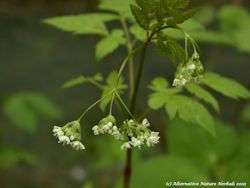
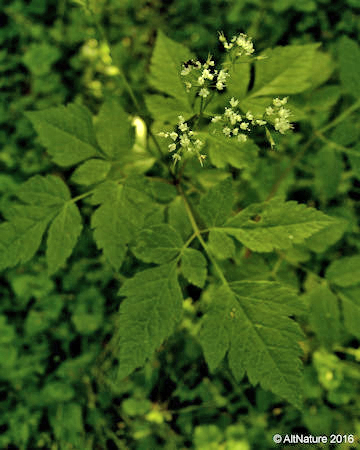
The fern-like leaves have egg shaped leaflets that are deeply lobed and toothed. The stem is branched it grows from 2 to 3 feet high, it is reddish and smooth with many lacy light green, leaves and white flowers in an umbelliferae atop the stem. The sweet scented flowers are hermaphrodite (have both male and female organs). The plant is self-fertile and blooms from April to May. Later, the seeds will stick to clothing when you brush against it.
Growing Sweet Cicely
Sweet Cicely is a very attractive plant
that succeeds in any deep moisture-retentive soil in
part or full shade.
Grow from seed or rootlets.
Harvesting and Using Sweet Cicely
The leaves and flowers are edible in salad and add a great flavor, or boiled and eaten as a potherb. The root is eaten raw or dried and ground for use as spices.
Gather the edible roots, flowers and leaves in spring, as soon as they bloom. Dry roots for later herb use.
Fennel seed substitute: Cut root into small pieces, dry, grind, and sprinkle on pizza instead of fennel seed.
Herbal tea: Use fresh or dried root 1 tsp. to a cup of water, bring to boil, steep 10 minutes.
Sweet Cicely Folklore and History
A decoction of the herb
was used as nostril wash to increase dog’s
sense of smell.
The aromatic scent is said to be an
aphrodisiac, used as a love medicine.
Disclaimer
The herbal information on this web site is intended for educational purposes only. It is not the intention of the editor to advise on health care. Please see a medical professional about any health concerns you have. These statements have not been evaluated by the FDA. The information on this web site is not intended to prevent, diagnose, treat, or cure any disease.