Educating about Medicinal Herbs Online Since 1997  Alternative Nature Online Herbal
Herbs, Black Cohosh,Poke Berries, Mountain Mint
 

Medicinal Herb Plants List
 

Wild Medicinal
Herb Articles

Ethical Wildcrafting of Herbs

Harvesting and using Medicinal Herb Roots

Wildflower and Herb Identification Tips


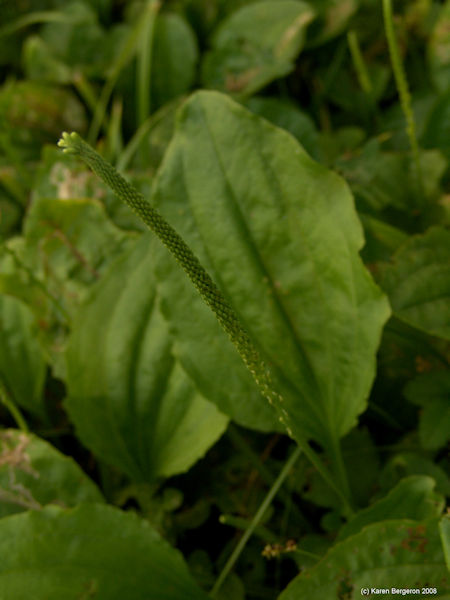
Close up plantain herb leaf and spike

Plantain 

Plantago major

Photo by Karen Bergeron Copyright 2008

Other Names:  Common Plantain, Broadleaf Plantain, Great Plantain, Greater Plantain, Ripple Grass, Plantago Asiatica, Waybread, Waybroad, Snakeweed, Cuckoo's Bread, Englishman's Foot, White Man's Foot, Che Qian Zi (China), Breitwegerich (German), Tanchagem-maior (Portuguese), Llantén común (Spanish), Llantén major (Spanish)

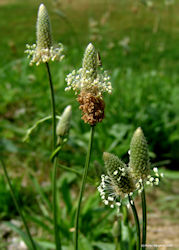
cluster of plantain herb in wildPlantain Habitat

Plantain is a perennial herb, thought to be of Eurasian origin and now naturalized throughout the world. Plantain is considered a common and noxious weed by some and a miracle plant by others.

Plantain Cultivation:

Plantain is very easy to cultivate, it succeeds in any soil and prefers a sunny position, some forms have been selected for their ornamental value. It is an important food plant for the caterpillars of many species of butterflies. Plantain grows from a short, tough rootstock or rhizome, which has a large number of long, straight, yellowish roots, is a basal, rosette of large, broadly oval, dark green, leaves. The 4 to 10 inch long smooth, thick, strong and fibrous leaves have 3 to 7 or more ribbed veins, abruptly contracting into a long, petiole (leaf stalk) which is reddish at the base. The leaf margin is of Plantain is entire, or unevenly toothed. The flower stalks, are erect, long, slender, densely-flowered spikes. Each tiny flower is brownish and bell-shaped with four stamens and purple anthers. Flowers bloom most of the summer. The fruit is a two-celled capsule and containing four to sixteen seeds. Harvest fresh young edible leaves in spring. Gather Plantain after flower spike forms, dry for later herb use.
Plantain Medicinal Properties and Herbal Use

Plantain is edible and medicinal, the young leaves are edible raw in salad or cooked as a pot herb, they are very rich in vitamin B1 and riboflavin. The herb has a long history of use as an alternative medicine dating back to ancient times. Being used as a panacea (medicinal for everything) in some cultures, one American Indian name for the plant translates to "life medicine." And recent research indicates that this name may not be far from true! The chemical analysis of Plantgo Major reveals the remarkable glycoside Aucubin. Acubin has been reported in the Journal Of Toxicology as a powerful anti-toxin. There are many more highly effective constituents in this plant including Ascorbic-acid, Apigenin, Baicalein, Benzoic-acid, Chlorogenic-acid, Citric-acid, Ferulic-acid, Oleanolic-acid, Salicylic-acid, and Ursolic-acid. The leaves and the seed are medicinal used as an antibacterial, antidote, astringent, antiinflammatory, antiseptic, antitussive, cardiac, demulcent, diuretic, expectorant, haemostatic, laxative, ophthalmic, poultice, refrigerant, and vermifuge. Medical evidence exists to confirm uses as an alternative medicine for asthma, emphysema, bladder problems, bronchitis, fever, hypertension, rheumatism and blood sugar control. A decoction of the roots is used in the treatment of a wide range of complaints including diarrhoea, dysentery, gastritis, peptic ulcers, irritable bowel syndrome, haemorrhage, haemorrhoids, cystitis, bronchitis, catarrh, sinusitis, coughs, asthma and hay fever. It also causes a natural aversion to tobacco and is currently being used in stop smoking preparations. Extracts of the plant have antibacterial activity, it is a safe and effective treatment for bleeding, it quickly stops blood flow and encourages the repair of damaged tissue. The heated leaves are used as a wet dressing for wounds, skin inflammations, malignant ulcers, cuts, stings and swellings and said to promote healing without scars. Poultice of hot leaves is bound onto cuts and wounds to draw out thorns, splinters and inflammation. The root is said to be used as an anti-venom for rattlesnakes bites. Plantain seeds contain up to 30% mucilage which swells in the gut, acting as a bulk laxative and soothing irritated membranes. The seeds are used in the treatment of parasitic worms. A distilled water made from the plant makes an excellent eye lotion.

Plantain Herbal Folklore and History

Native Americans carried powdered roots of Plantain as protection against snakebites or to ward off snakes. Plantain was called Englishman's Foot or White Man's Foot as it was said to grow where ever their feet touched the ground - this is referred to in Longfellow’s 'Hiawatha.'. Some old European lore states that Plantain is effective for the bites of mad dogs, epilepsy, and leprosy. In the United States the plant was called 'Snake Weed,' from a belief in its efficacy in cases of bites from venomous creatures.

Plantain Recipes

"Medicinal"  herb tea:  For colds and flu use 1 tbls. dry or fresh whole Plantain (seed, root, and leaves) to 1 cup boiling water, steep 10 min. strain, sweeten. Drink through the day.

Healing salve: In large non-metallic pan place 1lb. of entire Plantain plant chopped, and 1 cup lard, cover, cook down on low heat till all is mushy and green. Strain while hot, cool and use for burns, insect bites, rashes, and all sores. Note: used as night cream for wrinkles.

Article by Deb Jackson & Karen Bergeron

Next > Pokeweed 


Sponsor
Organic Herbs and Spices
Bulk Teas 
Herbal Information
Herbal Supplies and Glassware
Bulk Tea Bags

Quality Herbs, Low prices!

picture of Jewelweed flowerJewelweed,
Natural Poison Ivy Treatment


Email Questions and Comments to Karen

Karen's Other
Herb Sites

Free Herb Pictures for web sites,
click here

Latest Headlines about Medicinal Herbs, Alternative Medicine and Health

Products
Prunella Vulgaris-
Herbal Remedy for Cold Sores/Herpes

Advertising
Rates

Interested in Health Freedom?

 Drugstore.com

Important Wildcrafting Links ( Off Site, Non-commercial information )

Plants for a Future - a resource centre for rare and unusual plants, particularly those which have edible, medicinal or other uses.    Wildcrafting for the Practical Herbalist  Manual PDF     Herb Hunters Guide    Wildcrafting Checklist

Latest Alternative Medicine and Health News

Herbal Home  Medicinal Herbs Uses and Pictures Gallery (Plant List)   Jewelweed, Herbal Poison Ivy Treatment Herbal Links  Poison Ivy Pictures Gallery  Herb Farming Info  Altnature Online Store  Herbal Q & A's   Over 500 Herb Pictures  View Free Herbal Videos  Disclaimer, Site and Contact Information, and Privacy Policy at Bottom of Page 
Add Alternative Nature Online Herbal to your Favorites


AltNature Herbals Store is open by appointment for herb and aromatherapy classes and demonstrations. If you have questions about herbs, please email karen@altnature.com   Editor Karen Bergeron   1919 N. Main St  Tennessee Ridge TN 37178
Phone Orders and Customer Service call 877 753 0087 Toll Free in US
 

Disclaimer: This herbal web site was designed to teach about herbs, wild herb conservation, historical uses and latest herb research. This information is presented for educational use only. It is not meant to diagnose, cure, treat or prevent any disease. Please discuss your health issues as well as herb and supplement use with your doctor.

  Free Herb Pictures for Your Web Site
From my own collection

Subscribe to AltnatureHerbNews
Powered by 
health.groups.yahoo.com
Latest Alternative Health News
at  
www.alternative-herbal-medicine.net

Nature's Herbal Natural Mosquito & Insect Spray w/Catnip Oil

Amazing Jewelweed Remedies
Herbal Remedy for Poison Ivy, Oak and other skin conditions