Introduction to Poisonous Plants in the Wild
By: Judy Mullins
Greetings from Kentucky, the Bluegrass state. Before I begin my article on poisonous plants, I would like to give you a brief history about myself. I do not have a degree in botany. The articles I write today, or in the future, are only met to be informative. In no way, should you disregard your doctor's orders concerning your health. I will not be held responsible for any herbal remedies you might use, and thereafter have ill effects.
Since early childhood, I have always had an interest in various plants, trees, pretty or unusual rocks, anything to do with the great outdoors. My dad used to help me identify trees, and some of the wild plants on our farm. Over the years, I have continued to study about nature. In 1991 I was lucky enough to acquire an old log cabin. It was re-constructed on the farm. Since then, it has become a center for learning about pioneer crafts, wild herbal workshops, as well as a country getaway. At the cabin, I have school groups, churches, boy scouts, etc. that come out for field trips. In the fall of 1994, a school group from our local county was attending my cabin tour, and listening to my talk about what the pioneers used for foods, and medicines. Afterwards, a lady who was there with her grandson, came up to me, and starting talking about wild herbs. She said, did you know you can use this for this, and that for that, and so on? I said, "Oh my gosh, if I had known there was someone in the audience as knowledgeable as you, I would have been too shy to have talked about herbs."
The lady's name is Vivian Madden. From that day forward we have become good friends. She has been such an inspiration to me, and has taught me a lot of what I know about wild plants today. Vivian grew up in the mountains of Eastern Kentucky. As a small child, she toddled along with her grandfather, and mother in the woods and fields. They collected plants and roots for food and medicines. Not just for the fun of it, but for survival. The first lesson she learned was plants you do not touch, and especially what you do not eat. Everyone knows about poison ivy and poison oak. But are you aware of other plants you see or walk over anytime you go out in the fields and woods?
Poison Hemlock is a very common deadly plant that grows in abundance along roadsides, and marshy areas. It grows to be over 6 ft.. tall. The leaves look something like large parsley. The stalks are green with purple blotches. The plant has such a horrible smell. It's beyond me, how anyone could attempt to eat it. But because of the parsley like appearance, it is sometimes ingested with deadly consequences. Jimsonweed, is another plant that should be avoided. In my area, it grows in barnyards where the soil is rich. The bloom is white, and looks like a morning glory. The plant is in the nightshade family. All parts of the plant is extremely poisonous, and can cause death. The word Jimsonweed comes from the common name Jamestown weed. This refers to an incident in the Jamestown colony, when soldiers used the plant in their food, and spent the next 11 days in a state of incoherence. In other words, it takes you on a trip, that you are likely not to come back.
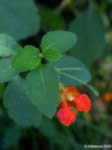
May apple, the plant grows in rich, moist woods and clearings. Only the ripe fruits are non-poisonous. All are other parts are too dangerous to use. The American Indians sometimes used the roots and shoots to commit suicide. In the past small doses of the plant were used to treat such ailments as, liver problems, cancer, intestinal worms, warts, and as a laxative.
There is a long list of poisonous plants. Never use any wild plant, or root until you have definitely learned to identify it. A lot of plants have look a likes. For this reason, you should be very careful. A few of these plants that I will no longer try are wild garlic, wild strawberries, and especially mushrooms. Mushrooms are so easily mistaken for their poisonous look a likes.
The Indians and pioneers, learned from trial and error, as to what plants to use. They learned to watch the animals very closely. If they ate a plant, or berries with no ill effects, it was safe for them as well. We've come a long way since our early ancestors trial and error experiences. Today we have trained professionals that can guide you. Health food stores, libraries, and bookstores have materials on
the subject of wild herbs and plants. Each Spring and Fall, Vivian Madden and myself conduct workshops here on my farm in North Central Kentucky. The workshops last all day. We talk about, and search for plants that are poisonous, and best of all, the ones we can still use in our daily lives, to help promote a healthier way of living.
You can contact me by e-mail at: cabin@comtechusa.net
Until next time, happy a great day, and good luck in your study and search of nature's bounty.
Judy Mullins,
Mullins Log Cabin Getaway