Lemon Balm Herb
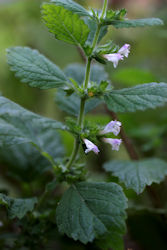
Melissa officinalis
Other Names: Balm, Balm mint, Blue balm, Dropsy plant, Garden balm, Sweet balm, Lemon balm, Melissa
Lemon Balm Herbal Use
Lemon Balm is an edible and medicinal plant. The fresh leaves can be added to salad or used in egg dishes and can be used to make sauces for fish, poultry and pork. The whole plant of Lemon Balm, dried or fresh, is used to make cool refreshing drinks or warm relaxing teas.
Lemon Balm contains a volatile oil citral and citronella which is strongly antispasmodic and aids in calming nerves, relieving menstrual cramps, insomnia, depression, hyperthyroidism, upset stomach, and colic in babies. Lemon Balm leaf tea is good for fevers, colds, and headache. Fresh crushed leaves are applied to wounds and insect bites. The essential oils of Lemon Balm in the fresh plant, particularly citronella, make it a most effective insect repellent when crushed and rubbed on skin or clothes. The leaves and young flowering shoots are antibacterial, antispasmodic, antiviral, carminative, diaphoretic, digestive, emmenagogue, febrifuge, sedative, and tonic.
Research has shown that Lemon Balm contains polyphenols, and it can help significantly in the treatment of cold sores and combat the herpes simplex virus. Added to bath, Lemon Balm relieves muscle tension and soothes irritated skin. Lemon Balm oil is often added to skin preparations and perfumes. The essential oil (which is quite expensive and often adulterated with lemon or lemongrass) is used in aromatherapy and is very pleasant used in potpourris.
Lemon Balm Native Habitat and Description
Lemon Balm is common throughout Europe, but mostly cultivated in the United States. It sometimes grows wild in sunny fields and along roadsides. It is a perennial and is easily cultivated by seed or root division in rich, sandy or loamy soil. The branched upright stem is square and grows to about 3 feet in height. The leaves are bright green growing in opposite pairs they are ovate and serrate. The whole plant has fine hairs and a lemony scent when crushed. The flowers are yellow-white to rose colored or even bluish, two lipped, bilabiate they grow in clusters at the joints or some times on small branches at the joints. Lemon Balm blooms from about July to August. Gather the leaves flowers and stems as soon as the flowers begin to open.
Lemon Balm Folklore and History
In ancient times Balm was planted by ones front door to drive away evil spirits. It was also used to draw bees to the hive. Avicenna, an 11th century Arab herbalist said "it causeth the mind and heart to become merry".
Lemon Balm Herb Recipes
Breakfast tea: 2 tsp. chopped leaves added to 1 cup boiling water steep 5 to 10 min. strain add honey and, or lemon.
Cold highnooner: 2 tbsp. per cup of cold water, let stand for 6 to 8 hours. Strain, add ice peppermint sprig and sweeten to taste.
Article by Deb Jackson & Karen Bergeron
Disclaimer
The herbal information on this web site is intended for educational purposes only. It is not the intention of the editor to advise on health care. Please see a medical professional about any health concerns you have. These statements have not been evaluated by the FDA. The information on this web site is not intended to prevent, diagnose, treat, or cure any disease.