Goldenseal Herb
Hydrastis canadensis
Goldenseal is endangered and should be cultivated, not harvested from the wild in most places.
Other Names: Yellowroot, Yellow puccoon, Eye balm, Eye root, Indian dye, Ground raspberry, Jaundice root
Goldenseal Herbal Use
Goldenseal herb is probably best known for its unproven reputation for avoiding positive results in drug tests for marijuana. For this reason, it has been overharvested in many places. It is more likely that drinking a gallon of water, which is suggested with the goldenseal, dilutes the urine enough to yield a false negative result.
Goldenseal is used as an herbal remedy internally for short periods of time (2 months or less) as an antiseptic, antibacterial, and is considered antispasmodic, laxative, and astringent. It is made into an infusion or weak tea for upset stomach and disorders of the digestive system, also makes a great mouthwash for sore gums, pyorrhea, mouth ulcers, and as gargle for sore throat. Douching with the tea is said to help relieve itching and vaginal infections. The powdered root can be snuffed or sniffed in the nose for infected sinuses. Use a few drops of the herbal infusion warm for ear ache and eye wash for sore eyes and sties. Use externally as a wash or rub in paste form, for ringworm, athletes foot, infected sores, and skin diseases. Goldenseal is also used to stop bleeding (homeostatic). A yellow dye is obtained from the root and the smashed root smeared on the body is said to repel insects.
The Goldenseal plant constituents confirm these uses and further studies indicate the presents of hydrastine, berberine and canadine which are showing promise in fighting cancer and other diseases.
CAUTION: Large doses are poisonous and extended internal use or use during pregnancy is not recommended.
Goldenseal Description and Habitat
Goldenseal is a native North American perennial plant found growing from Vermont to Minnesota and southward. It is rare in some places due to over harvesting.
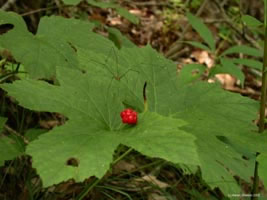
Goldenseal is found mostly in shady deep woods and damp meadows, prefers humus, rich, well drained soil, shade, and can be cultivated by using seeds or transplanting seedlings or rootlets. Goldenseal grows to about 18 inches high, the stem and leaves are hairy and deep green. The large palmate leaves are serrate, with five to seven lobes, growing near the stem top in nearly alternate pairs. Goldenseal herb blooms from March to May. A solitary, small, greenish-white flower which appears to be furry appears atop the stem. The fruit is red and resembles a raspberry. The root is thick and knotted, bright yellow, and has long thin root hairs. Gather Goldeneal roots in mid summer and early fall.
Goldenseal History and Folklore
Goldenseal refers to the root scars from old growth which looks like the old seal or stamp used to seal envelopes. Some Native American tribes considered goldenseal a sacred herb, and used it extensively, not only for its healing powers and to stop bleeding, but as a paint or bright yellow dye and applied it to their faces, horses and weapons during ceremonial dances before going to war. It was believed by the early settlers that if they destroyed all the yellowroot the Indians would not attack because they could not paint themselves.
Recipe
Stomach tea: To 1 pint of boiling water add 1 tsp. powdered root, let stand till cool. Take 1 to 2 tsp. up to six times a day. Also used as mouthwash, douche, and ear drops. For eye wash add 1 tsp. boric acid to mixture while hot.
Article by Deb Jackson & Karen Bergeron
References