Mountain Mint Herb, Wild Mint
Pycnanthemum spp.
Other Names: Wild basil, Wild Mint, Virginia-thyme, Torrey's Mountain-mint, Short Tooth Mountain Mint, Virginia Mountain Mint, Narrow Leaf Mountain Mint , Hoary Mountain Mint
Mountain Mint Herbal and Edible Use
Mountain-mint is edible and used by herbalists for remedies. The flower buds and leaves are edible raw or cooked, and have a hot, spicy, mint-like flavor that makes a great spice or seasoning for meat.
The fresh or dried leaves of Mountain Mint are brewed into a refreshing minty herb tea that is alterative (for that run down feeling), analgesic, antiseptic, diaphoretic, carminative, emmenagogue and tonic. The tea is used in herbal medicine for the treatment of menstrual disorders, indigestion, mouth sores and gum disease, colic, coughs, colds, chills and fevers. A strong decoction is said to be helpful poured over festering wounds. Crushed Mountain Mint flowers are placed on tooth ache and almost instantly kills pain.
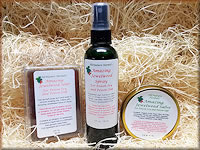
Mountain Mint is a very aromatic herb is used in potpourri or burned as incense. Placed in a muslin bag it can be used as bath additive, and is said to be very soothing to irritated skin. Will freshen laundry when used in the dryer. Thrown in a drawer or trunk it will not only freshen clothing and blankets, but keep moths away. Sprinkle on carpets to freshen the whole house and is said to be a good natural insecticide, the plant does repel insects and is good for use in the garden. Crushed flowers are rubbed on clothing to repel insects.
Caution: Not for use by pregnant women, may be harmful to fetus.
Mountain Mint Native Habitat
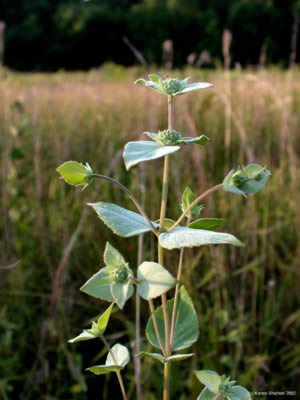
Several species of mountain mint grow in our area. It is a perennial herb native to Northern America, Canada, Virginia to New England, north to North Dakota, south to Tennessee, Georgia. Found growing on gravelly shores, meadows, dry to wet thickets, roadsides, open woods.
How to Grow Mountain Mint
Mountain-mint is an easily grown plant, it succeeds in most well-drained soils, including dry ones, and prefers a sunny position.
Mountain Mint Description
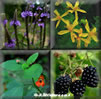
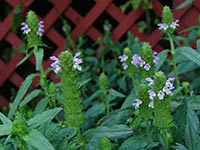
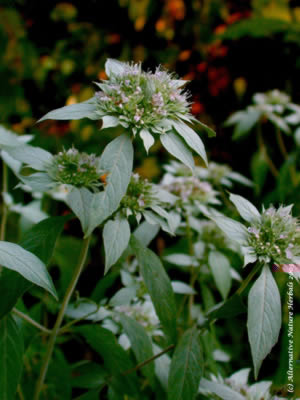
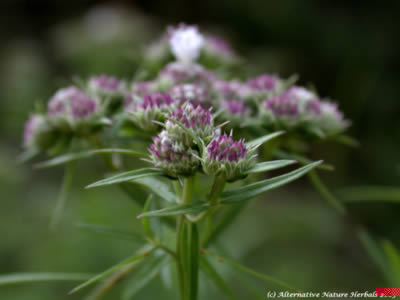
Mountain Mint grows up to 5 ft. tall, usually branched on the upper half, growing from slender rhizomes (underground stems) usually in clusters. The lance to broad -shaped leaves are 1-2 inches long and light green turning to almost white as plant matures, slightly serrated, but usually smooth. Blooming in late summer to early fall, flowers are arranged in round, flat, tight clusters at the top of the plant. The 1/2 inch long flowers are whitish or pale lavender, the lower lip spotted with purple. Gather tops and leaves when flowers bloom and dry for later herb use. Pictured below is Virginia Mountain mint, or Narrow Leaf Mountain Mint. It has a fainter scent than the above species.
Mountain Mint History and Folklore
Mountain Mint herb was considered powerful medicine and used by medicine men to revive the dead. Several native American tribes claim that the fresh crushed flowers, when stuffed up the nose of a person near death will revive them.
Karen’s Comments
"An absolutely delightful mint often found on side of woods and in abandoned fields. I use for natural carpet freshener. Prevention Magazine had an article that said it is good as a natural insecticide. James Duke says he rubs it on his pants before going out in the woods.
Last summer I got the worst case of chiggers. Put a muslin bag of this stuff in a real hot bath and soaked in it for half hour, then got out and rubbed myself with vinegar and the itching stopped.
This mint can be grown from roots. I have not done cuttings yet. One of my garden friends fertilized his and it got huge like a bush about 6 feet tall and I have seen them taller in some places.
Article by Deb Jackson and Karen Bergeron (c) 2000, photography by Karen Bergeron