Herbs for the Nervous System
Keith Stelling, MA, MNIMH, Dip. Phyt, MCPP (England)
Herbalism is sometimes maligned as a collection of home-made remedies to be applied in a placebo fashion to one symptom or another.. provided the ailment is not too serious and provided there is a powerful chemical wonder-drug at the ready to suppress any "real" symptoms.
We often forget, however, that botanical medicine provides a complete system of healing and prevention of disease. It is the oldest and most natural form of medicine. Its history of efficacy and safety spans centuries and covers every country on the planet. Because herbal medicine is holistic medicine, it is, in fact, able to look beyond the symptoms to the underlying systemic imbalance; when skillfully applied by the trained practitioner, herbal medicine offers very real and permanent solutions to very real problems, many of them seemingly intractable to pharmaceutical intervention.
Nowhere is the efficacy of herbalism more evident than in problems related to the nervous system. Stress, anxiety, tension and depression are intimately connected with most illness. And the herbalist finds his success accelerated by including in his treatment, medicine to free the body from the vicious cycle of interference from worry and nervousness that so often takes its toll on otherwise healthy systems.
Few health practitioners would argue with the influence of nervous anxiety in pathology. We know that the Xth Cranial Nerve, the Vagus, travels down from the medulla oblongata at the brain stem to innervate the pharynx, heart, bronchi, lungs and gastro- intestinal tract, including the small intestine, caecum, appendix and colon, supplying both motor and sensory fibers. It is not surprising that nervous stress can interfere directly in digestion. Nervous tension is generally acknowledged by pathologists to contribute to duodenal and gastric ulceration, ulcerative colitis, irritable bowel syndrome and many other gut-related pathologies. We know also from physiology that when a patient is depressed, the secretion of hydrochloric acid...one of the main digestive juices... is also reduced so that digestion and absorption are rendered less efficient. Anxiety, on the other hand, can lead to the release of adrenaline and stimulate the over-production of HCL and result in a state of acidity which may exacerbate the pain of an inflamed ulcer. In fact, whenever the voluntary nervous system (our conscious anxiety) interferes with the autonomic processes, (the automatic nervous regulation that in health is never made conscious), pathology is the result.
But few other health professionals have access to the scope of botanical remedies with their fine subtlety in rectifying this type of human malfunction. The medical herbalist knows, for example, that a stubborn dermatological problem can best be treated by using alternatives specific to the skin problem, circulatory stimulants to aid in the removal of toxins from the area, with re-enforcement of the other organs of elimination (liver and kidney); but above all he will achieve the excellent results for which phytotherapy is famous, by using herbs which obviate nervous interference in the situation and allow the patient to relax... perhaps for the first time in many months.
Curiously this is an approach which has never been taken up by orthodox medicine. There, the usual treatment of skin problems involves suppression of symptoms with steroids. Our subtle, non- invasive botanical nervines are not available in synthesized form. And the use of anti-histamines or benzodiazepines by the orthodox profession often achieves less lasting benefit to the patient than an additional burden of "impairment of intellectual function",[1] drowsiness, further toxicity for an already compromised metabolism, and often life-long drug dependence.
Botanical nervines, on the other hand, are mostly free from toxicity and habituation. Because they are organic substances and not man-made synthetic molecules, they possess a natural affinity for the human organism. They are extremely efficient in balancing the nervous system. Restoring a sense of well-being and relaxation is necessary for optimum health and for the process of self-healing.
Herbal medicine can justifiably boast of Valeriana officinalis (Valerian), the ideal "tranquilizer". The rhizomes of this plant contain a volatile oil (which includes valerianic acid), volatile alkaloids (including chatinine), and iridoids (valepotriates) which have been shown to reduce anxiety and aggression and even to counteract the effects of ethanol [2]. So effective is Valeriana in cutting out the interference of anxiety while maintaining normal mental awareness, that it enables the patient to continue the most complicated mental exercise without drowsiness, loss of consciousness or depression. Valerian has been usefully taken even before an examination or a driving test!
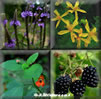
Verbena officinalis (Vervain) on the other hand, is not only effective against depression, but also strongly supports the detoxifying function of the liver. Its French name is still "Herbe Sacre"; an old English name is "Holy Wort"; for Vervain was one of the seven sacred herbs of the Druids. (Significantly Druidic medicine worked very much upon the psychological background to the disease, attempting to revitalize the psyche before healing the body). To-day we know that the antispasmodic qualities of Verbena are largely due to the glycoside verbenalin. Recent Chinese research has linked the plant with dilation of arteries in the brain: a likely explanation of its usefulness in treating migraine, especially when this problem is accompanied by liver congestion. It is certainly indicated for hysterical, exhausted, or depressive states.
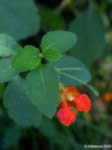
Hypericum perforatum (St. John's Wort) is an analgesic and anti- inflammatory with an important local application to neuralgia and sciatica. Systemically, its sedative properties based on the glycoside hypericin, (a red pigment), make it applicable to neurosis and irritability. Many English herbalists use it extensively as a background remedy.
Melissa officinalis (Lemon Balm) being both carminative and antispasmodic, is active specifically on that part of the vagus nerve which may interfere with the harmonious functioning of the heart and the stomach. Recent experiments at the University of Heidelberg have confirmed that the action of the volatile oil begins within the limbic system of the brain and subsequently operates directly upon the vagus nerve and all of the organs that are innervated by it. Accordingly, neurasthenia (complete nervous prostration), migraine, and nervous gastropathy are amenable to its healing power.
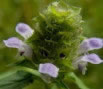
The great herbal restoratives of the nervous system are Avena sativa (Oats), Scutellaria lateriflora (Scullcap) and Turnera diffusa (Damiana). Oats contains a nervine alkaloid which also helps to restore the heart... (again the vagus connection). According to Canadian research, Avena is helpful in angina and in cardiac insufficiency. Moreover in an article in Nature in 1971, Gonon outlined its usefulness in the treatment of addiction to morphine, narcotics, tobacco and alcohol... a use which is still current in British hospitals.
But the list does not stop here. Rosmarinus officinalis (Rosemary) helps the circulation to the brain and is therefore useful in geriatric senility; Lavandula officinalis (Lavender) exerts a cardio-tonic and anti-migraine action; Tilia europea (Linden or Lime Flowers) is an antispasmodic particularly suited to problems of venous congestion and arteriosclerotic states, but gentle enough for an anxious child.
There is great scope for the development of herbal medicine in the area of nervous diseases and of its application in so-called "mental illness" where pharmaceuticals seem at best to be applied for their "management" effect. And this is an area where the benefits of a whole food diet and holistic life-style are badly neglected.
Among the more outstanding serious problems that have been recorded at the Clinic of Herbal Medicine in Balham, London, England, (the teaching clinic of the National Institute of Medical Herbalists), are: the control of Parkinson's disease in a 59-year old man; the elimination of epileptic seizures in a 14-year old girl; the removal of clinical depression in a 46-year old woman; the eradication of frequent migraine attacks in many patients; and the regulation of the wide mood swings and other distressing symptoms that accompany both menopause and premenstrual stress in countless women patients. (These are just cases which I myself have witnessed over a period of 10 months).
Understandably, the choice of a nervine most suitable to an individual patient must be based upon a thorough health assessment and the experience and training of a qualified herbal practitioner. But even the layman can do much to alleviate stress and sooth frayed nerves. Drinking Chamomile, Lemon Balm or Linden tea (long the custom in Europe). is the prudent choice instead of coffee for anyone having sleeping difficulties or anyone who wishes to achieve a greater sense of inner calm. Twenty minutes out-of-breath exercise (walking, swimming, or cycling) will go a long way as a natural antidote to the pent-up tension that results from a stressful day at the office. And it will have the unexpected bonus of improving circulation, increasing metabolic rate and enhancing heart and lung function. The B-vitamins as found in whole-wheat bread, wheat germ, torula or brewer's yeast and liver (organically produced) provide ideal nourishment for the nervous system and can be wisely substituted for the stimulant foods such as white flour, sugar, junk foods and their myriad harmful chemical additives.
Profiles of More Calming Herbs
Passionflower California Poppy Motherwort
70+ More Medicinal Herb Profiles and Pictures
This Article is taken from The Herbalist, newsletter of the Botanic Medicine Society. COPYRIGHT Dec 1988. Membership in the Society is $25.00 Canadian per year. You receive four copies of the Journal each year and help to promote herbalism and botanic medicine throughout Canada.
THE SOCIETY HAS NO PAID OFFICIALS and is run entirely by volunteers from among the membership. If you would like more info please write: Botanic Medicine Society. * P.O. Box 82. Stn. A. * Willowdale, Ont. CANADA. M2N 5S7.
Reprinted with permission.
Copyright 1996, 1998 by The Herbalist, Lori Herron and Alternative Nature
Back To Library