Pinkroot, Indian Pink
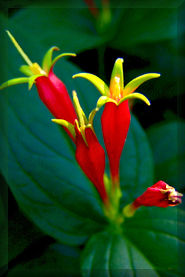
Spigelia marilandica
Other Names: Indian Pink, Maryland Pink, Pinkroot, Wormgrass, American Wormgrass, American Wormroot, Starbloom
Caution : Toxic! Useful only to experienced herbalists familiar with its use.
Pink Root Medicinal Use and Herbal properties
Pink Root was used in early herbal medicine in North America but it is rarely used today, as there are safer herbal remedies for de-worming.
Spigelia properties include: antibacterial, antidiarrheic, antioxidant, antiviral, anthelmintic, and laxative. It is most popular as an anthelmintic and is most potent for tapeworm and for the round worm. Pink Root can be a safe and efficient herbal remedy, if administered in proper doses and always followed by a saline aperient, such as magnesium sulphate. Otherwise, it can be unpleasant and serious side effects may occur.
Pinkroot is said to be narcotic in large doses, causing increased heart action, dizziness, vertigo, disturbed vision, muscular spasms, convulsions and possibly death.
Extensive Information on the Historical Herbal use of Spigelias
Indian Pink Root Habitat and Description
Pinkroot is a Southeastern North American native perennial herb, found in rich woods from New Jersey to Florida and west to Texas and Wisconsin, primarily in the Southern States. Indian Pink is fast disappearing, due to over harvesting.
The leaves are pointed, stemless, alternate and opposite growing from 2 to 4 inches long, and up to 3 inches wide. The showy flowers are tube-shaped, bright scarlet red outside, opening into a bright yellow 5 pointed star, flowers bloom from May to July atop a smooth simple erect stem from 6 inches to 2 feet high. The roots are rhizome, knotty and dark-brown externally, with many thin, long, wiry rootlets attached to it, marked with scars of the stems of former years, internally the rhizome is whitish, with a darkbrown pith.
Cultivation: a very ornamental plant, Indian Pink succeeds in most fertile soils in semi-shade, transplant root cuttings in rich well drained soil.
Spigelia Marilandica Propagation Information from
University of Kentucky College of Agriculture
The rootstock of Pinkroot is collected in fall, after the flowers fade. The root is best used when fresh but can be harvested in the autumn then dried for herbal use.
Indian Pink Root Folklore
Used by the Cherokee and other American Indians tribes as a ritual and ceremonial herb to induce visions and foretell the future. Also used as poison in some suicidal ceremonies.
Article by Deb Jackson & Karen Bergeron Copyright 2001, Updated 12/2018